Stem cell therapy belongs to regenerative medicine, a field that aims to use the body’s own potential for repair and renewal to address signs of ageing and tissue damage. In medical aesthetics, this treatment usually refers to revitalising the skin and hair with cells obtained from the patient’s own tissue. Rather than introducing a synthetic substance, it uses the body’s own building blocks – stem cells and fibroblasts – making it a highly personal and biocompatible approach.
At our clinic in Beşiktaş, Istanbul, I apply this advanced treatment according to each patient’s needs and biology, to high scientific and ethical standards. The aim is not a superficial, temporary fix but support for the skin’s health at a cellular level, helping it become livelier and more resilient. Because it uses autologous tissue – taken from the patient themselves – it is a natural option within aesthetic and anti-ageing medicine.
Regenerative Medicine: The Body’s Ability to Repair Itself
Regenerative medicine aims to treat damage not only by suppressing symptoms or intervening from outside, but by stimulating and supporting the body’s own repair mechanisms. Its philosophy is less about repairing the body like a machine and more about nourishing it like a garden so it can heal itself. Every tissue is constantly renewing itself, but with age, illness and environmental damage this natural capacity slows.
Stem cells are master cells with two unique abilities: they can turn into other cell types (differentiation) and renew themselves (proliferation). In medical aesthetics, “stem cell therapy” usually takes the form of autologous fibroblast therapy. Fibroblasts are the cells in the dermis that produce the collagen and elastin fibres responsible for firmness and elasticity – the architects of the skin. As we age, their number and activity fall, so collagen production drops and the skin sags and wrinkles.
In this method, a tiny piece of skin (biopsy) is taken, usually from behind the ear, an area that sees little sun and where the skin stays youngest. It is sent to a specialised laboratory licensed by the Ministry of Health and working to GMP (Good Manufacturing Practice) standards, where fibroblasts are separated and multiplied in special culture media until there are millions of new, young cells. This takes about 4–6 weeks. The fresh fibroblasts are then injected back into areas where rejuvenation is wanted (face, neck, décolletage, hands), where they start producing new collagen and elastin, gradually improving skin quality, firmness, elasticity and hydration.
Stem Cell Therapy
Stem cell therapy in aesthetics is an autologous, biological treatment in which living fibroblasts taken from your own body and multiplied in a laboratory are injected back into the skin or scalp – for skin rejuvenation, softening wrinkles, improving skin quality, treating scars such as acne scars, and supporting the hair. Fibroblasts are the “factories” of the dermis, producing collagen, elastin and hyaluronic acid; with ageing, sun damage and other factors, they decline in number and output. The treatment is a kind of “cell transfer” that aims to revive this slowed production. It follows a careful, multi-stage protocol:
- Tissue sample (biopsy): under local anaesthetic, a skin sample about 3–4 mm across, the size of a lentil, is taken painlessly from behind the ear with a punch biopsy. It usually needs no stitches and is covered with a small plaster.
- Multiplying the cells in the laboratory: the sample is sent in a special transport solution to a licensed, GMP-certified cell laboratory, where biologists isolate the fibroblasts and grow them under sterile, controlled conditions for about 4 to 6 weeks, with purity and viability checked throughout.
- Injection: when enough cells are obtained (usually 20–40 million per session), they are sent to the clinic ready for injection. Treatment is usually planned as 3 sessions about 3–4 weeks apart, with the cells injected into the face, neck, décolletage or backs of the hands using a mesotherapy technique with very fine needles.
The injected fibroblasts settle in the dermis and begin producing new collagen, elastin and hyaluronic acid, gradually restructuring the skin from within. This is not a superficial glow but a natural, gradual rejuvenation that strengthens the skin’s structure.
Uses: Skin Rejuvenation and Hair
Skin rejuvenation (anti-ageing): the most popular use. While fillers, Botox and lasers address the signs of ageing, fibroblast therapy targets one of their sources – the decline of collagen-producing cells. As new fibroblasts get to work, fine lines and wrinkles (especially around the eyes and above the lip) can soften, elasticity and firmness improve with a gentle overall toning, skin texture becomes smoother with tighter-looking pores, and hydration and brightness increase. It can be used on the face, neck, décolletage and backs of the hands, and can also help acne scars and other scars: although it gives no instant volume like filler, the skin’s own repair can gradually raise the base of depressed scars.
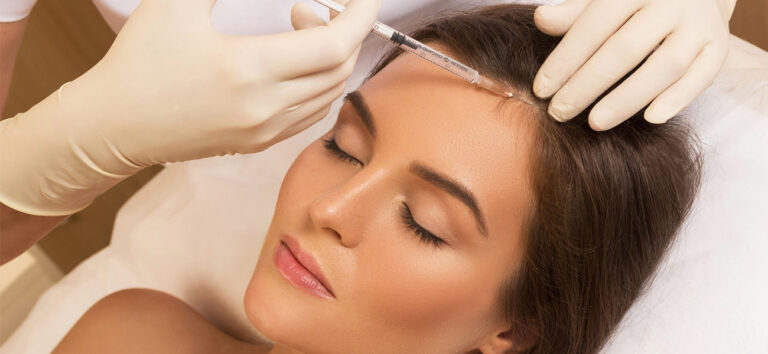
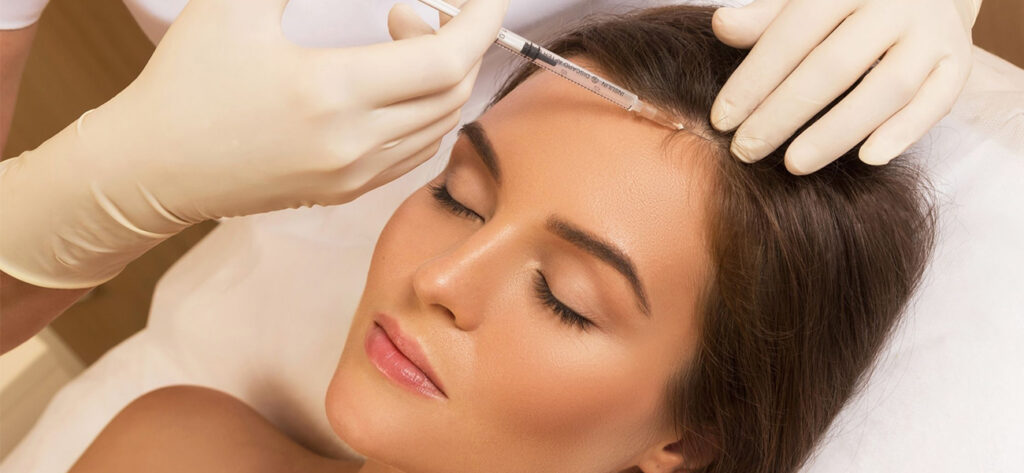
Hair loss: a common cause of hair loss is weakening of the blood supply to the follicles and their gradual miniaturisation. Fibroblasts and other progenitor cells from your own tissue (usually from behind the ear or the nape) are injected into the thinning areas of the scalp, where they may improve the tissue around the follicles, encourage new blood vessel formation and stimulate resting follicles to return to the growth phase. This can slow hair loss, make existing hair thicker and stronger, and revive fine, miniaturised hairs.
The Process, Expectations and Duration
Unlike treatments with instant results, this therapy follows the body’s own biological clock: it requires patience, but its results are very natural. Understanding the process helps manage expectations, so I explain it fully. It consists of three steps: biopsy, multiplying the cells in the laboratory (about 4–6 weeks), and injection, usually in 3 sessions 3–4 weeks apart.
After the first injection session, most people do not notice an immediate change: this is not a filler, and the injected fibroblasts need time to adapt, settle and start producing collagen and elastin. The first positive effects usually appear after the second session, with more vitality, radiance and hydration. The more noticeable results usually become clear about 1–2 months after the third session, when new collagen production peaks and firmness, elasticity, fine lines and texture visibly improve. The process continues after the last injection, and the final result can take 6 months to a year to settle.
Because the treatment renews the skin’s own fibroblasts rather than adding an external substance, its effects are long-lasting compared with fillers or Botox; they are often reported to last several years. How long depends on your age, genetics and lifestyle (smoking, diet, sun protection), and no treatment can stop ageing completely, but it may slow it and make the skin more resilient. A single booster session or a new course may be recommended after a few years. Results vary from person to person; this treatment suits people looking for natural, gradual, long-term improvement rather than quick, dramatic change.
Book Stem Cell Therapy (Autologous Fibroblasts)
We will assess together whether it suits you.
This page is for general information. Suitability, possible side effects and expected results are assessed at a medical consultation; results vary between individuals.