Nasolabial filler is a non-surgical aesthetic treatment that reduces the depth of the nasolabial folds – the “smile lines” or “parenthesis lines” running from the sides of the nose to the corners of the mouth – removes shadowing in the area and gives the face a younger, more rested and more positive expression. These lines are a natural part of facial expression, but when they deepen and become permanent they can make a person look older, tired or even sad.
Nasolabial filler uses hyaluronic acid fillers, a substance found naturally in the body that gives the skin moisture, volume and elasticity, to replace lost volume and soften deepened folds. At our clinic in Beşiktaş, Istanbul, I do not see this simply as filling a line. I analyse the anatomical reasons behind it – volume loss and sagging in the mid-face – and take a holistic approach that addresses the cause. The aim is to restore natural anatomy without artificial puffiness, rebuild the face’s “triangle of youth” and keep your expression natural.
Signs of Ageing: Why Do Nasolabial Folds Deepen?
Nasolabial folds are among the most visible and earliest signs of ageing. Contrary to popular belief, they are not formed just by creasing of the skin; they result from complex, three-dimensional structural changes in the mid-face.
The most important factor is volume loss in the mid-face. A young face has deep fat pads over the cheekbones (malar fat pads) that give the cheeks a full, healthy look and act like a suspension for the tissues below. From around our thirties, these fat pads begin to shrink, and the bones – especially the cheekbone (zygoma) and upper jaw (maxilla) – lose density and recede. Having lost both bony support and fat volume, the cheek tissue slides down and inwards with gravity and gathers above the connective tissue running from the nose to the mouth, deepening the fold and creating a shadow. So the problem is less the line itself than the sagging cheek tissue that forms it. That is why the modern approach aims first to replace mid-face volume: strategically placed filler on the cheekbones lifts the cheek tissue up and back, so the fold opens and softens by itself.
The second factor is declining skin quality. Production of collagen, elastin and hyaluronic acid slows, and the skin becomes thinner, drier and less elastic. It recovers less easily after expressions such as smiling, and over time these dynamic lines become permanent folds. Genetics, face shape and bone anatomy also play a role, and some people are naturally more prone to these lines. Smoking, excessive sun exposure, irregular sleep and poor diet speed up collagen breakdown and can make the folds appear earlier and deeper. I assess each face from this holistic perspective, looking at the anatomical changes behind the line to plan the most natural result.
Nasolabial Filler
Nasolabial filler is the injection of dermal fillers, especially hyaluronic acid, to reduce the depth of the folds (sulci) from the sides of the nose to the corners of the mouth, replace lost volume and give the mid-face a smoother, younger, more rested look. It is one of the most common and effective treatments for a tired, sad expression.
Today’s approach is more refined than simply filling the line directly; it also addresses the causes. Nasolabial filler is therefore often combined with mid-face and cheekbone filler for a more natural, effective “lifting” effect. Medical-grade hyaluronic acid works in harmony with the body, has a very low allergy risk and is safely broken down by the body’s own enzymes over time. For the nasolabial area, medium-density fillers that both support and blend well with tissue are usually chosen.
The plan depends on your face. If the main cause is mid-face volume loss and sagging, treatment usually starts with filler on the cheekbone area. This strategic “lifting” injection raises the cheek tissue and opens the fold considerably. If some depth remains, a more superficial filler is then placed directly in the line. This “indirect and direct” approach preserves the face’s natural contours, prevents the artificial, puffy look (“pillow face”) that overfilling can cause and gives a much more elegant result.
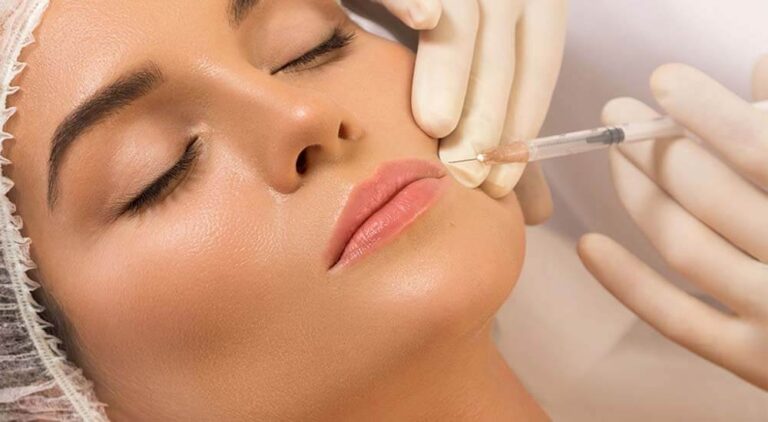
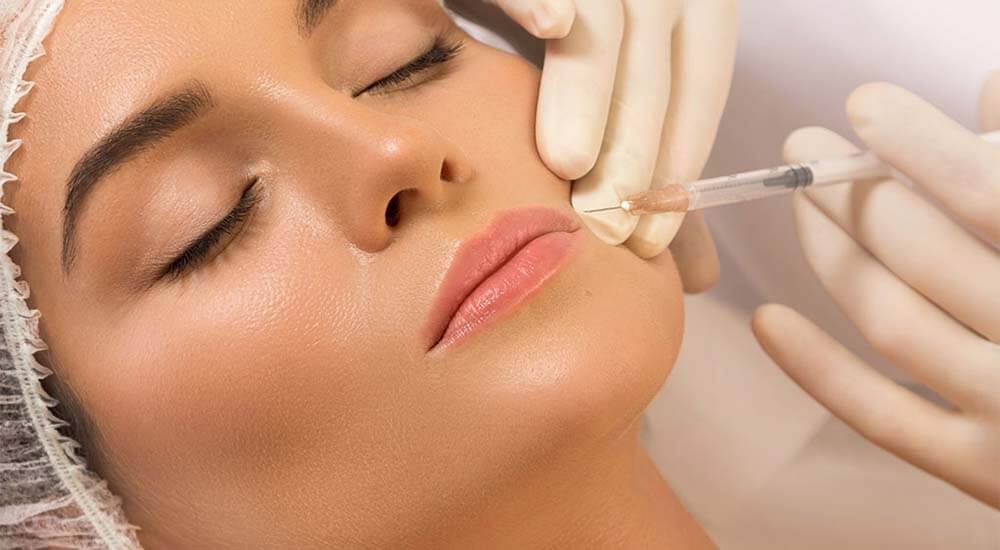
A local anaesthetic cream is applied first, then the skin is cleaned with an antiseptic. Injections are made with very fine needles or with a blunt cannula, which causes less tissue damage and reduces the risk of bruising; cannulas are often preferred to spread filler evenly over larger areas and for safety. The filler is injected slowly and carefully into the appropriate layer (usually the deep dermis or subcutaneous fat). It usually takes 20 to 30 minutes. Results are visible at once: the fold is less deep, the shadow fades and the face looks brighter, without your expression changing.
Who Is It Suitable For and How Does It Work?
Nasolabial filler is potentially suitable for almost any adult bothered by a tired, older look and deepening lines from the nose to the mouth, but correct patient selection is essential. Ideal candidates include:
- Mild to moderate age-related volume loss: people whose folds have become noticeable due to fat and bone loss in the cheeks, especially when combined with mid-face “lifting” filler.
- Dynamic lines that have become permanent: lines that once appeared only when smiling but are now visible at rest.
- Naturally deep folds from genetics and anatomy, even at a young age.
- Asymmetry, where one fold is deeper than the other.
Where sagging is very advanced, the cheek tissue has become heavy and the fold very deep, filler alone may not give the desired lift; surgical options such as a facelift, or combined treatments such as focused ultrasound (HIFU) or thread lifting, may be more realistic. The treatment is not suitable where there is an active infection (such as a cold sore) or skin condition in the area, during pregnancy or breastfeeding, or for people allergic to the filler’s ingredients.
Treatment always starts with a physician consultation analysing your anatomy, skin quality, muscle movements and pattern of ageing, to identify the source of the problem (sagging, volume loss or skin laxity) and plan the amount of filler and technique. On the day, the area is cleaned and anaesthetic cream applied, and the filler is injected at the planned points, usually with a cannula or needle. It takes about 30 minutes and you can return to social life immediately. Mild redness, swelling or tenderness usually passes within 1–2 days. To reduce bruising, avoid blood-thinning medicines and foods before and after, and apply ice afterwards. For the first 24 hours, avoid firm massage, heavy exercise and very hot environments. Results are visible at once, but the final result settles in about 2 weeks.
The Modern Approach: Lifting the Face, Not Just Filling the Line
The modern understanding of nasolabial treatment differs considerably from the past. Previously, the main goal was to “erase” the fold by injecting filler directly into it. That could work in some cases, but it often ignored the real problem – volume loss and sagging in the cheeks – and, especially with large amounts of filler, could create artificial puffiness around the mouth, a “simian” look and distorted natural contours, leaving the face heavier and less expressive.
Today’s aesthetic physicians follow a more refined philosophy: “lift the face, not just the line”. The nasolabial fold is a result; its cause is loss of mid-face support. I therefore usually begin by assessing the cheeks and cheekbones, placing strategic injections of denser fillers with high lifting capacity that imitate bone. This “liquid facelift” technique restores projection to the cheekbones and gently lifts the sagging cheek tissue up and out. Like a suspension, it reduces pressure on the fold so that it opens and softens naturally.
In many patients, this mid-face treatment alone gives a clear improvement and no injection into the line itself is needed, which means less filler, more natural results and no risk of artificial puffiness around the mouth. If some shadow or depth remains, a much smaller amount of softer filler is placed superficially at the base of the fold as a finishing touch. The advantages of this two-step “indirect and direct” approach:
- More natural results: natural anatomy and contours are preserved; your expression stays the same, just younger and more rested.
- Less filler: addressing the cause usually gives better results with less product.
- A lifting effect across the whole mid-face, not just a filled line.
- Long-term satisfaction: because structural support is improved, results are more satisfying and longer-lasting.
Combined with an experienced physician’s understanding of facial anatomy and ageing, modern nasolabial treatment has become a way of rebuilding the face’s architecture to bring out your natural beauty in the most elegant way.
Book Nasolabial Filler
We will assess together whether it suits you.
This page is for general information. Suitability, possible side effects and expected results are assessed at a medical consultation; results vary between individuals.