On this page
NAD+ therapy aims to support levels of nicotinamide adenine dinucleotide (NAD+), a coenzyme that every cell in the body needs. If our cells are engines, NAD+ is one of their essential fuels: it plays a central role in hundreds of biochemical reactions, from turning food into cellular energy (ATP) to helping repair damaged DNA. Research shows that NAD+ levels decline with age, and this decline is being studied for its links to reduced energy, slower recovery and ageing.
NAD+ therapy, usually given as an intravenous (IV) infusion, is offered as a complementary well-being and healthy-ageing treatment. It is an active area of research; much of the evidence for its benefits in humans is still emerging, it does not treat any disease and it is not a substitute for medical care. At our clinic in Beşiktaş, Istanbul, NAD+ infusions are planned individually after a medical assessment and given under close supervision.
Why Do NAD+ Levels Fall, and Why Does It Matter?
NAD+ has two main roles. First, in the mitochondria – the cells’ power stations – it helps break the chemical bonds of carbohydrates, fats and proteins and convert them into ATP, the basic unit of energy. Second, it acts as a helper molecule for cell repair and maintenance, especially for protein families such as sirtuins (sometimes called “longevity genes”, involved in regulating metabolism, inflammation and the cell’s response to stress) and PARPs (which help repair DNA damaged by environmental factors and normal metabolism).
Several factors contribute to the decline in NAD+ with age. Chronic inflammation and oxidative stress increase DNA damage, and the PARPs that repair it consume large amounts of NAD+. At the same time, the pathways that produce and recycle NAD+ become less efficient. The body therefore uses more NAD+ and makes less. Supporting NAD+ levels is one of the strategies being explored in healthy-ageing medicine.
NAD+ Therapy
NAD+ therapy is a proactive protocol that aims to replenish NAD+ levels quickly by giving it directly into a vein. Rather than masking symptoms, its rationale is to support the cell’s energy production and repair mechanisms. People use it with goals such as:
Potential Benefits Being Explored
- Energy and vitality: because NAD+ is central to mitochondrial energy production, some people report feeling more energetic and less tired after a course.
- Mental clarity: the brain is the body’s most energy-hungry organ, and NAD+ is involved in protecting neurons from oxidative stress; some people report improved focus and less “brain fog”.
- Healthy ageing: through its role in DNA repair (PARPs) and sirtuin activity, supporting NAD+ is being studied as a way to support cellular health as we age.
- Metabolism and recovery: NAD+ is central to metabolism, and some athletes use it to support energy and recovery after exercise.
Responses vary considerably between individuals, and more research is needed to confirm these effects.
Personalised IV NAD+ at Our Clinic in Beşiktaş
NAD+ precursors taken by mouth, such as NMN and NR, are absorbed variably; IV infusion delivers NAD+ directly into the circulation. The process begins with an in-depth assessment of your lifestyle, health history, medications and goals (such as energy, mental focus, athletic performance or healthy ageing), as well as conditions that may require caution, such as pregnancy, breastfeeding and certain heart or other medical conditions. Persistent fatigue or memory problems should always be investigated medically first. If NAD+ therapy is suitable, I determine the dose, infusion rate and number of sessions.
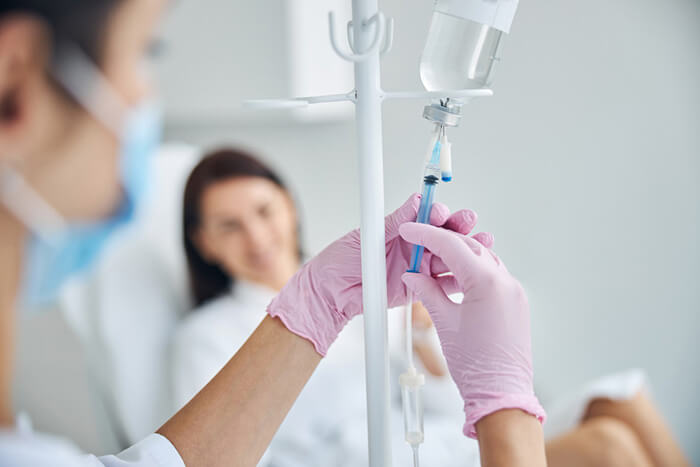
An NAD+ infusion is different from other IV treatments: it is given slowly and usually takes 2 to 4 hours. During the infusion some people experience temporary sensations such as mild chest tightness, warmth in the abdomen, nausea or slight pressure in the head. These usually settle quickly when the infusion is slowed, so I monitor the process closely and adjust the rate for your comfort. Experiences and results vary from person to person.
Book NAD+ Therapy
We will assess together whether it suits you.
This page is for general information. Suitability, possible side effects and expected results are assessed at a medical consultation; results vary between individuals.