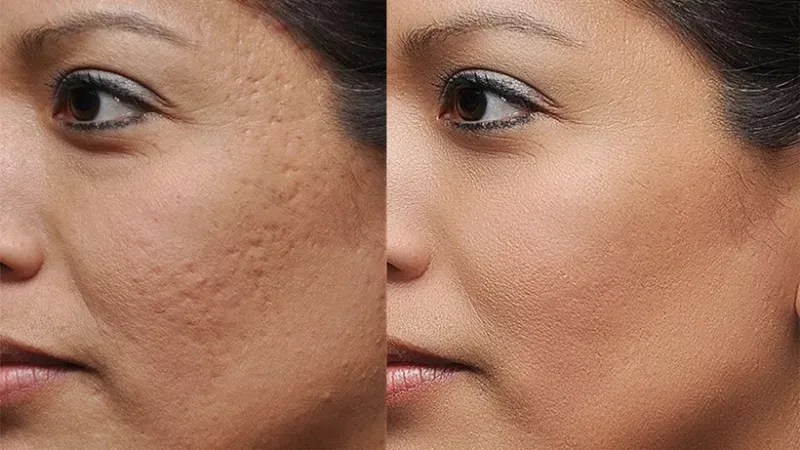
Acne scar mesotherapy is a targeted, minimally invasive treatment to improve sunken or raised scars left after acne in adolescence or adulthood, giving the skin a smoother, healthier texture. Acne affects confidence not only while it is active but also through the lasting marks it leaves. Acne scars are not simple stains but structural changes caused by damage to, or abnormal healing of, the collagen in the deeper layers of the skin.
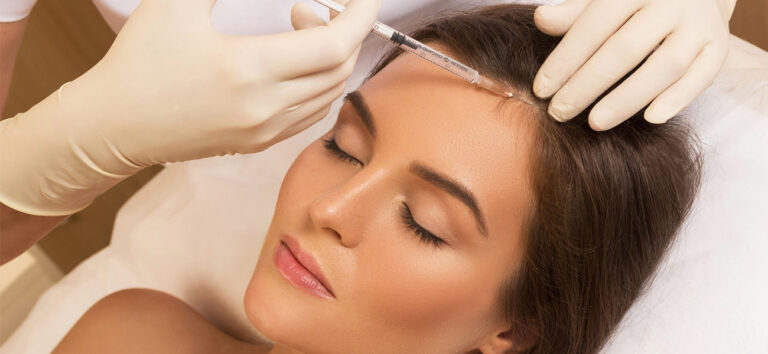
The treatment aims to correct this by triggering the skin’s own repair and renewal. Special cocktails of biocompatible, repairing ingredients – hyaluronic acid, growth factors, peptides, vitamins, minerals and amino acids – are injected with very fine needles directly into the middle layer of the skin (mesoderm) where the scar tissue lies. At a depth creams cannot reach, fibroblasts are stimulated to produce new, healthy collagen and elastin, so the base of sunken scars rises and the skin becomes more supple and smooth. At our clinic in Beşiktaş, Istanbul, I prepare protocols tailored to each person’s scar type and skin needs.
What Is Acne Scar Mesotherapy?
A severe or deep acne lesion (such as cystic or nodular acne) causes intense inflammation in the deeper layers of the skin. During healing, collagen fibres and supporting tissue can be damaged. If not enough new collagen is produced, the surface sinks, creating an “atrophic scar” – the most common type. Rarely, the body overproduces collagen, creating a raised “hypertrophic scar”. Creams and serums struggle to pass the outer barrier (stratum corneum) and so cannot reach the underlying collagen deficit or disorganisation. Mesotherapy delivers a repairing cocktail straight to the mesoderm – like feeding a plant at its roots.
The success of treatment depends on choosing the right cocktail for each scar type:
- Pure hyaluronic acid – different from the cross-linked hyaluronic acid in fillers – hydrates deeply, creates an ideal environment for fibroblasts and stimulates new collagen, helping to plump the base of sunken scars from the start.
- Growth factors (such as EGF and FGF) and peptides signal cells to repair and renew, organising the replacement of damaged tissue with fresh, healthy, orderly tissue.
- Organic silicon helps new collagen form in a more organised, stronger way, improving firmness and elasticity.
- Vitamins (especially A, C and E) and minerals (zinc, copper, selenium) are antioxidants that help calm chronic inflammation in scar tissue and provide cofactors for healthy tissue production.
- Polynucleotides such as salmon DNA support DNA repair and the skin’s capacity to renew itself.
Every Scar Is Different: An Approach for Each Type
Acne scars vary in depth, shape and width, and effective treatment starts with recognising their types. I map the scars on each patient’s face and choose the right strategy for each:
- Ice pick scars: narrow but deep, V-shaped holes, as if the skin had been pierced by an ice pick – usually the hardest to treat because they reach very deep layers. Mesotherapy alone is often not enough, but combined with treatments that stimulate the deep base of the scar, such as TCA CROSS (chemical reconstruction) or fractional laser, it gives very good results by speeding healing and supporting new collagen.
- Boxcar scars: wider, round or oval depressions with sharp, steep edges, as if punched out; similar to chickenpox scars. They respond well, because their main problem is lost volume from collagen loss. Hyaluronic acid, amino acids and peptides injected into the base strongly stimulate fibroblasts. Combined with microneedling (Dermapen/dermaroller), the micro-channels increase absorption and the collagen-inducing effects add up, softening the sharp edges and raising the base.
- Rolling scars: wide, shallow depressions with soft edges that give the skin a wavy, uneven look, caused by fibrous bands pulling the skin down from deeper layers. Mesotherapy can be used with subcision – releasing these bands with a needle – helping prevent the released area from reattaching and filling it with new, healthy collagen. Hyaluronic acid and organic silicon also improve overall elasticity and fullness.
The Treatment Process
Consultation: Listening to You, Understanding Your Skin
I ask about your acne history, previous treatments, lifestyle and how the scars affect your life. Your skin is examined under professional lighting to analyse the type (ice pick, boxcar, rolling), depth, number and distribution of scars, along with oiliness, sensitivity and tone. “One size does not fit all” is especially true of acne scars. A realistic plan is then made: whether mesotherapy will be used alone or combined with fractional laser, microneedling or chemical peels, and the contents of your cocktail, number of sessions and intervals. Possible results and side effects are explained openly.
The Procedure: Minimal Touches, Maximum Effect
The face or treatment area is cleansed and disinfected and a strong local anaesthetic cream applied for about 30–40 minutes. The sterile cocktail is then applied with very fine, short mesotherapy needles or a Dermapen device, concentrating on and around the scar tissue at strategically planned points. It usually takes 20 to 30 minutes.
Patience, Care and Visible Change
Rebuilding the skin takes time. Slight pinkness, swelling and sensitivity straight afterwards are normal; they usually fade within hours and disappear completely within 1–2 days, so you can return to social life soon. I will explain how to soothe your skin, which products to use and, above all, how to protect it from the sun: a high SPF 50+ sunscreen during and after treatment is vital to prevent new pigmentation and darkening of scars.
Acne scar mesotherapy is usually done as a course of 4–6 sessions, 2–4 weeks apart. The first visible results usually appear after the 2nd or 3rd session, as depressions gradually fill and the skin looks smoother, livelier and brighter, with greater improvement by the end of the course. Results vary between individuals.
Book Acne Scar Mesotherapy
We will assess together whether it suits you.
This page is for general information. Suitability, possible side effects and expected results are assessed at a medical consultation; results vary between individuals.