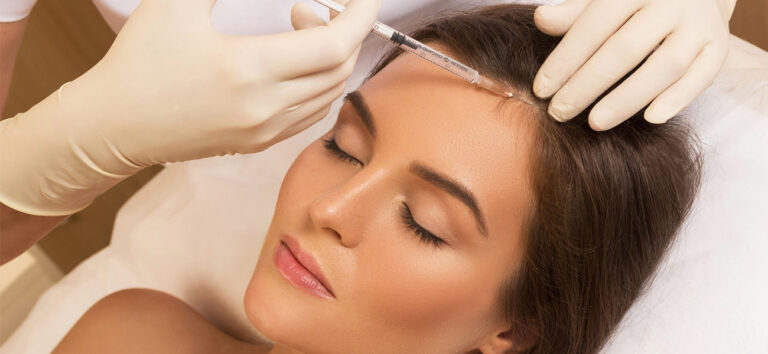
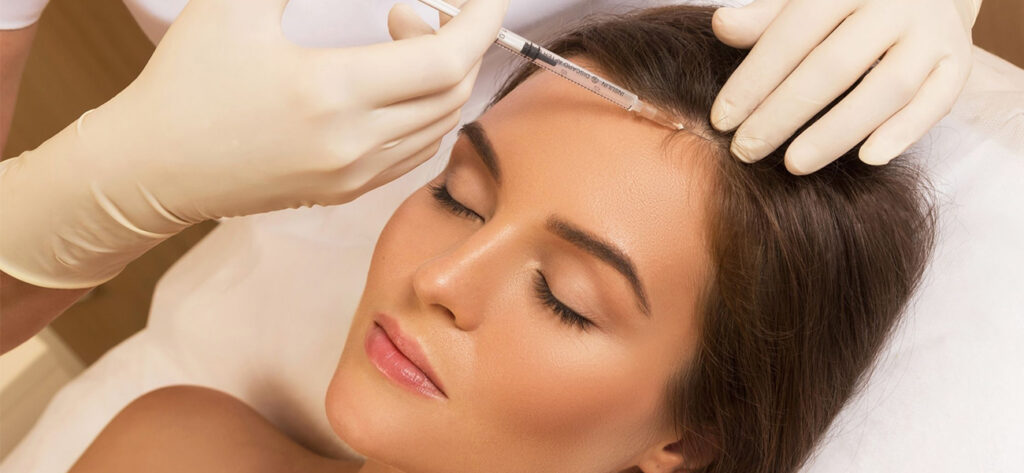
Biological lifting is an innovative aesthetic approach that aims to restore the firmness, elasticity and vitality the skin loses over time by stimulating the body’s own repair and renewal mechanisms. Unlike traditional fillers, its purpose is not to add volume or fill a specific line. Thanks to a specially developed hybrid hyaluronic acid technology, it spreads through the lower layers of the skin, activates fibroblasts and triggers intensive production of new collagen and elastin.
Results do not appear as immediate puffiness but as a natural tightening and revitalisation over weeks and months as the skin repairs itself. Sometimes called a “lifting vaccine”, it offers people who want firmer, tighter and brighter-looking skin without surgery an effective option. At our clinic in Beşiktaş, Istanbul, I apply it with a protocol tailored to each patient’s skin, respecting the face’s natural architecture: the aim is to gently reverse signs of laxity and sagging by improving skin quality at a cellular level, without changing your expression.
The Science of Laxity: Why Does the Face Fall Over Time?
The secret of young, firm skin lies in a rich support network in the dermis, built mainly from two proteins. Collagen acts like scaffolding, giving support and strength; elastin gives rubber-like elasticity so the skin returns to shape after movement. Both are produced by fibroblasts. From the mid-twenties, collagen and elastin production falls by about 1% a year, so the support network weakens and the skin becomes looser and more prone to sagging.
Volume loss speeds this up. Deep and superficial fat compartments shrink, and the facial skeleton – especially the cheekbones and jaw – recedes. Having lost both its underlying support and its own firmness, the skin slides down with gravity: the cheeks drop, nasolabial folds deepen, the corners of the mouth turn down and the jawline loses its contour, forming “jowls”. External factors accelerate the process dramatically: unprotected UV exposure (photo-ageing) breaks down collagen and elastin through free-radical damage, smoking disrupts circulation and slows repair, and stress, poor sleep and poor diet reduce the skin’s capacity to renew itself.
Biological lifting addresses the root of the problem rather than temporarily filling or pulling sagging tissue. It sends a strong biological signal for the skin to restart its own collagen and elastin production, so it begins to rebuild its internal support – a smart, long-term strategy that strengthens the skin’s own defences against ageing.
Biological Lifting
Biological lifting is a non-surgical facial rejuvenation method in which a special product made with a patented hybrid technology – high and low molecular weight hyaluronic acid thermally bonded together – is injected into the skin to counter loss of firmness and elasticity, soften sagging and redefine the facial contour. Its philosophy differs from dermal fillers: the aim is not to create artificial volume or “inflate” the face, but to achieve natural tightening by stimulating the skin’s own biology.
At its heart is the patented NAHYCO® hybrid technology, which combines high molecular weight hyaluronic acid (H-HA), used in fillers for volume, with low molecular weight hyaluronic acid (L-HA), used for hydration and repair, through a heat process without chemical cross-linking agents such as BDDE. The result is a very pure, highly concentrated and fully tissue-compatible complex with two main benefits:
- High spreading capacity: because it has no chemical cross-links, it spreads quickly and evenly through the lower layers of the skin instead of forming a mass, so it acts over a wide area of the face.
- Dual biological effect: the low molecular weight HA hydrates the dermis intensively and stimulates fibroblasts to produce new collagen and elastin (bio-remodelling), improving quality, hydration and firmness; the high molecular weight HA acts as supporting scaffolding in the skin’s matrix, giving a gentle tightening effect, especially in sagging areas.
I apply biological lifting with the BAP (Bio Aesthetic Points) technique, which targets 5 strategic injection points on each side of the face, chosen according to facial anatomy and ageing dynamics. These points are away from the main vessels and nerves and allow maximum spread of the product. With only 10 injection points, the lower and mid-face receive an effective lifting and revitalising effect. The procedure is quick and comfortable, taking about 15 minutes, with minimal risk of bruising or swelling, and you can return to social life immediately.
The Procedure and Session Plan
One of the greatest advantages of biological lifting is that it fits easily into a busy social or working life. It begins with a physician consultation assessing the degree of laxity and sagging, skin quality, age and expectations, deciding whether it suits you and whether it should be used alone or combined with other treatments (such as Botox, laser or filler).
On the day, the area (face, neck or décolletage) is cleansed and disinfected. Often no anaesthetic cream is even needed, as there are very few injections and they are made with very fine needles; most patients tolerate the minimal discomfort easily. The injections follow the scientifically established BAP scheme, with 5 bio-aesthetic points on each side:
- Cheekbone prominence (zygomatic projection): supports and lifts the mid-face.
- Base of the nose (nasal alar base): helps tone the nasolabial area.
- In front of the tragus (the small cartilage in front of the ear): increases firmness in the cheek area.
- Chin (pogonion): improves the lower facial contour and marionette lines.
- Jaw angle (mandibular angle): helps define the jawline.
About 0.2 ml of product is injected slowly at each point. The whole injection takes only about 10–15 minutes. Small raised bumps and slight redness at the injection points usually disappear within a few hours, and the risk of bruising is minimal – which is why it is sometimes called a “lunchtime lift”.
The standard protocol is two sessions one month apart. Where laxity is more advanced, a third session may be planned one or two months after the second. To maintain results, a single booster session once or twice a year is usually recommended.
Who Is It Suitable For and What Results Can You Expect?
Biological lifting is very suitable for people, especially from their thirties onwards, who are noticing the first signs of ageing and want natural rejuvenation without surgery. Ideal candidates include people with:
- Mild to moderate laxity: loss of elasticity, slight dropping of the cheeks, more visible nasolabial folds and slight loss of jawline contour.
- Dull, dehydrated, tired-looking skin, which the high concentration of hyaluronic acid hydrates intensively for a brighter look.
- Fine lines on the cheeks, around the mouth and on the neck, softened over time by increased collagen and elastin.
- A wish for natural results: it does not change the shape of the face, only improves skin quality for a firmer, younger version of you.
- A wish to support other treatments such as Botox, filler or laser, as part of a combined plan.
Where sagging is very advanced, with significant deep tissue and volume loss, biological lifting alone may not give enough lift, and a surgical facelift or more volumising fillers may be more suitable. Correct expectations and patient selection are important.
Results appear in two stages. Immediately, the concentrated hyaluronic acid gives instant hydration, radiance and a slight toning; the face looks livelier and more rested. The long-term biological effect develops over weeks and months as fibroblasts are stimulated: usually 4–8 weeks after the first session there is a noticeable increase in firmness, elasticity and tightness, a clearer facial contour and better skin quality. The effect strengthens after the second session and the final result can take a few months to settle. Rather than an instant camouflage, biological lifting is a smart treatment whose effects build over time. Results vary between individuals.
Book Biological Lifting
We will assess together whether it suits you.
This page is for general information. Suitability, possible side effects and expected results are assessed at a medical consultation; results vary between individuals.