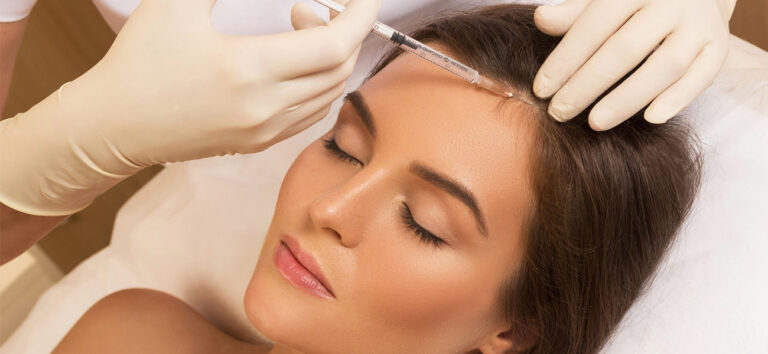
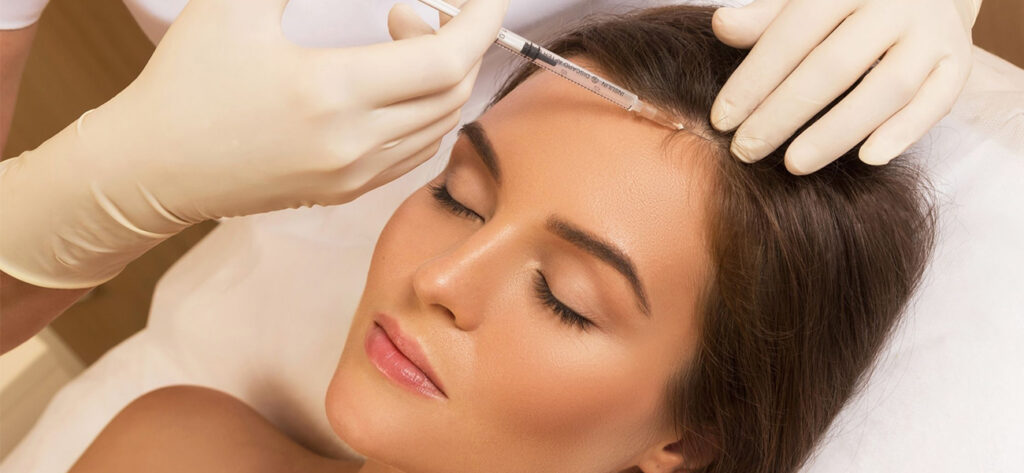
PRP treatment is an autologous regenerative treatment that uses the healing power found in your own blood to revitalise and renew the skin and hair follicles naturally. PRP stands for “Platelet-Rich Plasma”. Platelets, the blood cells responsible for clotting and wound healing, are concentrated through a special process and injected back where they are needed. No foreign substance is introduced; the tissue is supported using only your own biological material.
By sending a “wake-up” signal that activates the body’s repair mechanisms in tired, ageing tissue, PRP has become one of the most popular natural and safe treatments in aesthetic medicine. At our clinic in Beşiktaş, Istanbul, I apply it to high medical standards. The aim is not to mask signs temporarily but to improve the health of the skin and hair follicles at a cellular level, for a livelier, younger look.
The Healing in Our Blood: Platelets and Growth Factors
The body has a remarkable ability to repair itself. Even after a small cut, a series of well-organised events stops the bleeding, prevents infection and starts new tissue formation. The key players are platelets. They are known for clotting, but they are also tiny sacs storing hundreds of bioactive proteins and “growth factors”. When tissue is damaged, platelets rush to the area, form a plug and release these growth factors, which act like site managers, signalling nearby stem cells and repair cells to start work. PRP mimics this natural repair process in a concentrated form.
Normal blood contains about 150,000 to 400,000 platelets per millilitre. In PRP, a centrifuge separates the plasma from the other blood cells, producing platelet-rich plasma with 3 to 8 times more platelets than normal blood – and the growth factors are concentrated in the same proportion. Injected into the skin or scalp, it creates a biological “repair signal”. The growth factors released (such as PDGF, TGF-β, VEGF, EGF and FGF) stimulate fibroblasts, stem cells and other structural cells. In the skin, this triggers new collagen and elastin, encourages new blood vessel formation for better nourishment and speeds up repair. In the scalp, it revitalises the vessels feeding the follicles, stimulates weakened follicles towards the growth phase and extends the hair’s life cycle. I always emphasise to patients that no drug is given: your own blood’s healing potential is simply concentrated and returned where it is needed.
PRP Treatment
PRP treatment is the injection into the skin or scalp of plasma from your own blood that has been enriched with platelets and growth factors. Its safety and natural approach have made it a popular choice worldwide and in Istanbul for both skin rejuvenation and hair loss. The process consists of a few simple, comfortable steps:
- Blood draw: about 10–20 ml of blood is taken, as for a standard blood test – roughly one small tube – and placed in sterile PRP kits containing an anti-clotting agent.
- Centrifuge: the tubes are spun at high speed to separate the blood by density. Red blood cells settle at the bottom; in the middle collects the yellow, platelet- and growth-factor-rich plasma (PRP); platelet-poor plasma (PPP) remains at the top. This takes about 8–15 minutes.
- Preparation and injection: the PRP is carefully drawn into a syringe and applied to the treatment area (face, neck, décolletage, backs of the hands or scalp) by mesotherapy or microneedling (Dermapen).
In mesotherapy, very fine, short needles deliver PRP as small injections, which is effective for targeting specific wrinkles or scars. In microneedling, PRP is spread on the skin and a device such as a Dermapen opens thousands of micro-channels so it penetrates deeply, while the microneedling itself mechanically stimulates collagen production – a combined effect. I choose the method and personalise the protocol for each patient’s skin or hair.
Uses: Skin Rejuvenation and Hair Loss
Skin rejuvenation (anti-ageing): over the years, sun, environment and natural ageing reduce the skin’s vitality, firmness and radiance as collagen and elastin production slows. Concentrated platelets and growth factors “wake up” fibroblasts and signal them to produce collagen, elastin and hyaluronic acid again. As a result, fine lines and wrinkles can soften; elasticity and firmness improve with a gentle toning effect; the skin becomes more hydrated, brighter and more radiant; tone becomes more even and spots may look lighter. PRP can also help acne scars, other scars and stretch marks by boosting repair, and plays a supporting role for under-eye darkness by improving circulation and skin quality. It can be used on the face, neck, décolletage and backs of the hands.
Hair loss: one of the most common aesthetic concerns for both women and men. Genetic, hormonal, stress-related or nutritional causes weaken and miniaturise the follicles. PRP is one of the most widely used non-surgical treatments to support the follicles and slow hair loss. Injected into the scalp, it stimulates the vessels feeding the follicles and increases circulation; encourages resting (telogen) follicles to enter the growth (anagen) phase; improves the quality of existing hair, making it thicker and stronger; can noticeably reduce shedding; and may support new growth, especially of fine hairs. It is used particularly for androgenetic alopecia and diffuse hair loss in women, and as support after hair transplants to help grafts settle and speed healing.
Session Plan, Results and Safety
PRP is planned as a course rather than a single session, as it aims to stimulate biological repair cumulatively.
- Initial course: usually 3–4 sessions 2 to 4 weeks apart, adjusted to your age, skin or hair condition and response.
- Maintenance: once the desired results are achieved, a single session every 6 months or once a year helps maintain them.
PRP does not give instant results like filler or Botox; as a biological process, results take time. For the skin, radiance, vitality and hydration are often noticed after the first session, while collagen-related firming and softening of fine lines usually become noticeable after the 2nd or 3rd session; the final result can take a few months after the last session to settle. For hair, reduced shedding is usually noticed first, often after 1–2 sessions; improvement in quality, thickness and new growth usually appears after 3–4 months. Patience is an important part of this treatment.
Safety: because the material comes entirely from your own blood, the risk of allergic reaction is extremely low and no foreign substance or chemical is introduced. Under sterile conditions, the risk of infection is also very low. Mild redness, swelling, tenderness or small bruises may appear at the injection sites; these are temporary and usually fade within a few hours to a few days, and you can return to daily life straight away. Results vary between individuals.
Book PRP Treatment
We will assess together whether it suits you.
This page is for general information. Suitability, possible side effects and expected results are assessed at a medical consultation; results vary between individuals.