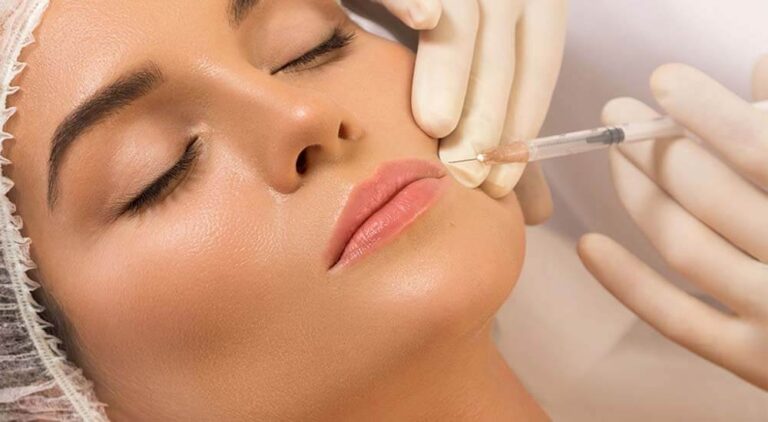
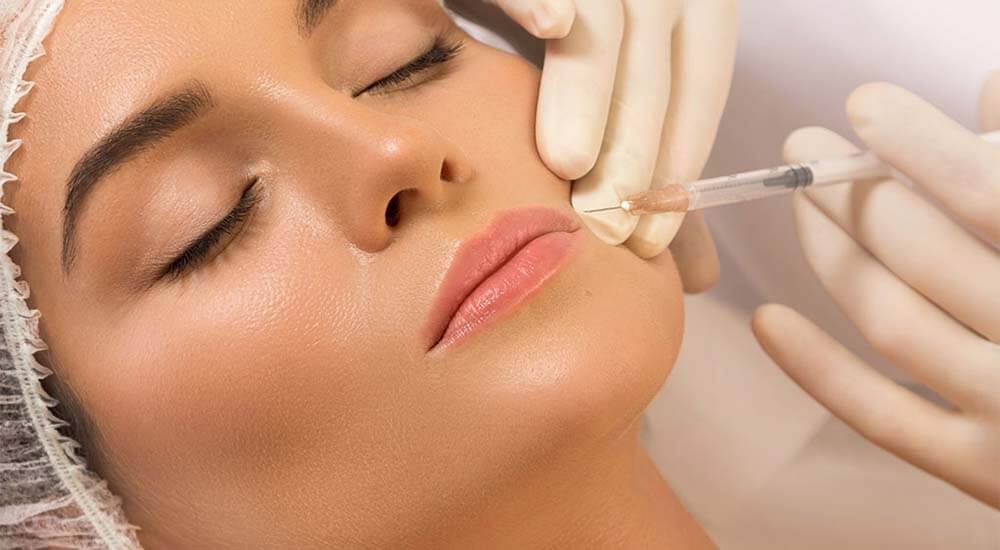
Jawline contouring is a non-surgical aesthetic procedure that makes the line running from the angles of the jaw to the chin sharper, clearer and more attractive. A strong, defined jawline is widely seen as a symbol of youth, attractiveness and vitality in both women and men. Also known as “jawline filler”, the procedure aims to improve the symmetry and proportions of the face for a more balanced, attractive profile.
Over time, a jawline can lose definition because of skin sagging with gravity, loss of bone density or a naturally weak chin, which can make a person look tired, heavier or older. Jawline contouring offers a modern, effective and comfortable solution. Denser hyaluronic acid fillers with a high lifting capacity, able to imitate bone structure, are injected at strategic points along the jawline.
At our clinic in Beşiktaş, Istanbul, I assess each patient’s face as a whole. Rather than simply filling a line, I respect the face’s proportions and create a personalised contour that reflects each person’s natural beauty and character. The aim is a strong yet elegant jawline in harmony with your expression, far from an exaggerated or artificial look. For those who do not want the risks and recovery of surgery or an implant, it is a satisfying way to reshape the lower third of the face and add strength to the expression.
Facial Proportions: The Role of a Strong Jawline
Facial aesthetics is not about the beauty of one area but about how all the features relate in harmony, balance and proportion. The jawline, which defines the lower third of the face, frames the face and shapes the basic character of its expression.
In men, a more angular, wider, defined jawline emphasises masculinity, strength and charisma; clearly defined jaw angles (the gonial angle) and a well-projected chin (pogonion) are key elements of a masculine face. In women, the ideal is softer and more elegant but still clear and defined: a “V-line” jawline that creates a clean transition between face and neck, tidies the area under the chin and makes the face look slimmer. A defined jawline also has practical benefits: it separates face and neck sharply, makes sagging under the chin less noticeable, and frames the face so the mid-face looks firmer and more lifted.
Not everyone is born with this ideal structure. Genetics can give a naturally weak, receding or asymmetrical jaw. Ageing is another major factor: production of collagen and elastin falls, fat compartments shrink and sag with gravity, and above all the facial bones, including the jawbone (mandible), lose density and recede. Together these changes blur a once sharp jawline, create the sagging known as “jowls” and make the lower face lose its shape and look squarer and older.
Many patients who come to our clinic in Beşiktaş say their blurred jawline makes them look tired and unhappy. I see jawline contouring not just as a filler treatment but as a way of rebuilding the face’s lost architecture: restoring support to the lower face improves both the profile and the frontal view and helps recreate the “triangle of youth”.
Jawline Contouring
Jawline contouring is the injection of high-density hyaluronic acid fillers with strong shaping capacity, designed specifically for this area, to make the contour of the jawline (the lower edge of the mandible) sharper, more defined and more attractive. Known as “non-surgical jaw aesthetics”, it reshapes the lower third of the face for a more balanced, symmetrical and strong expression in profile and from the front. It is used successfully both for the elegant “V-line” many women want and for a more masculine, angular jaw in men.
The principle is to imitate bone structure by strategically replacing missing volume along the jawline. The fillers used have a higher G-prime – more lifting and shaping capacity – so they stay where they are injected, do not spread through tissue and create a clear contour when placed on bone. This gives a weak or receding jaw structural support, creating the illusion of a stronger bone structure. Jawline contouring can achieve several goals at once:
- Sharpening the jawline: a jawline that has blurred naturally or with time becomes clearer and more defined, with a sharp transition between face and neck.
- Defining the jaw angles: especially in men, injections at the angles of the jaw create a squarer, stronger look.
- Strengthening and lengthening the chin: filler in a receding or short chin significantly improves the profile, reduces the look of a double chin and balances the lower face.
- Correcting asymmetry between the two sides of the jaw.
- Camouflaging jowls: filler at the front of the jawline and below the marionette lines supports and disguises jowls for a smoother jawline.
Before treatment, I carry out a detailed facial analysis covering bone structure, skin quality, fat distribution and muscle activity, listen to your expectations and explain realistically how far filler can meet them. A local anaesthetic cream is applied first. Injections may be made with sharp needles as deep injections onto the bone and with blunt cannulas, which cause less tissue trauma, for more superficial contouring; the choice depends on the goal and the physician’s judgement. It takes about 30 to 45 minutes depending on the amount of filler, results are visible immediately and you can return to social life straight away.
Who Is It Suitable For and How Does It Work?
Jawline contouring suits many women and men who are unhappy with how their lower face looks and want a more defined, sharper and balanced jawline. For the best and most natural results, correct patient selection is essential. The most suitable candidates include:
- A naturally weak or receding jaw: people whose jawline, chin or jaw angles are not well defined can gain a stronger, more balanced frame. This is perhaps the most common and successful indication.
- Loss of jawline with age: filler can restore volume and support lost through bone and fat loss and sagging skin, lifting the tissue slightly and redefining the line.
- An asymmetrical jawline, where volume can be added to the weaker side.
- Wanting a more masculine or feminine look: a more angular jaw for men, an elegant “V-line” for women.
- A double chin: increasing chin projection and defining the jawline can make fullness under the chin look optically less noticeable.
The treatment has its limits. Where skin sagging is very advanced or there is significant fat under the chin due to excess weight, filler alone may not be enough; combined treatments such as thread lifting, focused ultrasound (HIFU) or fat-dissolving injections under the chin may give better results.
The process begins with a detailed consultation in which your wishes are discussed, your face is analysed and a treatment plan is made, including how much filler is needed and where. Typically 2 ml to 6 ml of filler may be used for the jawline. On the day, the area is cleaned and a local anaesthetic cream applied, and injections are made at the planned points (chin, jaw angles and along the jawline), as deep boluses on the bone and as linear lines with a cannula. It takes about 30–45 minutes. Mild tenderness, swelling or redness may follow and usually passes within a few days. For the first 24 hours, avoid firm massage, very hot environments and heavy exercise. Results are visible at once, but the filler takes about 2 weeks to fully integrate and settle.
Safety, Longevity and Realistic Expectations
Because the jawline contains important vessels and nerves, the treatment must be done by a physician with good anatomical knowledge and experience. Patient safety always comes first at our clinic. Injecting in the correct anatomical planes is critical: superficial injections, especially with a cannula, minimise the risk of injecting into a vessel, while deep injections placed directly on the bone keep away from important vessels and nerves. The quality of the hyaluronic acid filler matters too; approved, reliable brands with high-density products made for this area should be used.
Temporary side effects such as mild swelling, redness, tenderness or bruising are normal and usually fade within a few days. The risk of infection is very low under sterile conditions. Rarely, serious complications such as vascular occlusion can occur, so the physician must be able to recognise and manage such emergencies, for example by dissolving the filler with hyaluronidase.
How long it lasts depends on the type and density of the filler, the amount injected and your metabolism. Denser, more cross-linked fillers used on areas like the jawline last longer than those used on softer, more mobile areas. On average, jawline contouring lasts 12 to 24 months, after which the filler is gradually and safely broken down and the treatment can be repeated. Regular treatments may stimulate some collagen production, extending longevity or meaning less filler is needed next time.
It is important to understand that filler does not give the permanent, radical result of a chin implant; it is a non-surgical, temporary and natural improvement. It does not change the bone, it imitates it for a better contour. With very advanced sagging, filler alone may not give the desired lift, and I will honestly recommend combined treatments or say when expectations cannot be met with filler. With correct patient selection, experienced hands, quality products and realistic expectations, jawline contouring is a safe and effective way to give the face a stronger, more attractive and younger expression.
Book Jawline Contouring
We will assess together whether it suits you.
This page is for general information. Suitability, possible side effects and expected results are assessed at a medical consultation; results vary between individuals.