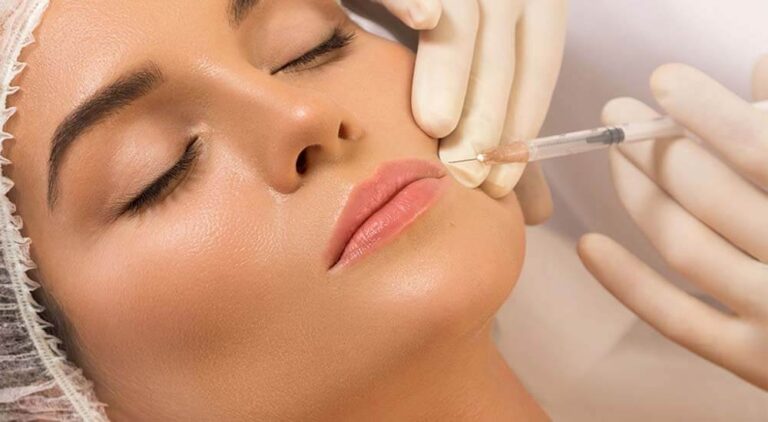
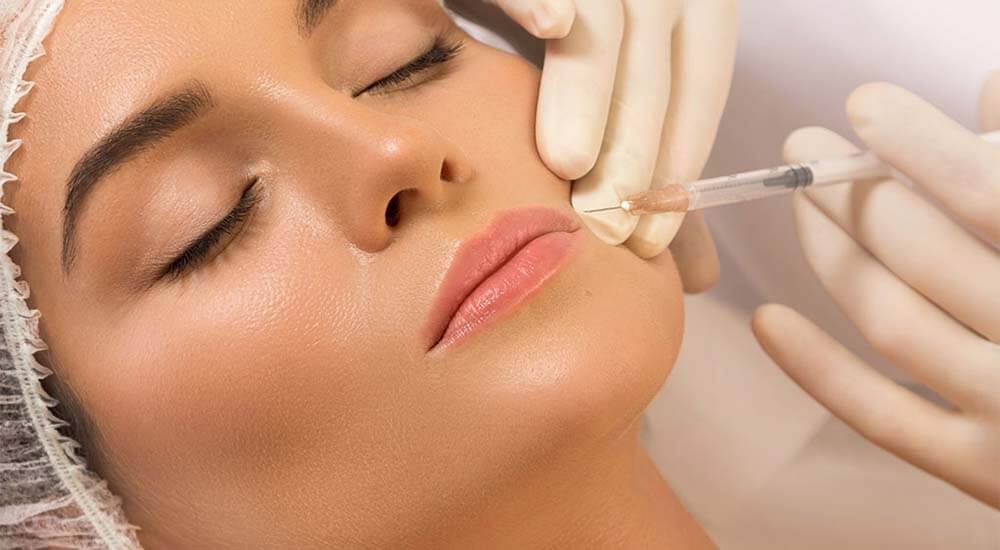
Nose tip filler is a non-surgical, minimally invasive treatment for the nose tip, one of the most delicate and important details of the face. A specialised form of non-surgical rhinoplasty, it is used to reshape and lift a tip that is drooping, undefined, asymmetrical or lacks projection, giving the face a more dynamic, attractive and elegant expression.
Because the nose tip sits at the centre of the face and defines the profile, even a tiny change can have a big effect on overall harmony. Nose tip filler therefore requires a sculptor’s precision, advanced anatomical knowledge and aesthetic vision. Safe, body-compatible hyaluronic acid fillers are used to give the tip structural support and the desired form.
At our clinic in Beşiktaş, Istanbul, I assess the face as a whole rather than focusing on the tip alone, planning the treatment around how this small change relates to the forehead, lips and chin. For people not yet ready for tipplasty (surgery on the nose tip), wary of its risks and long recovery, or simply looking for a subtle improvement, nose tip filler offers a quick, effective and comfortable solution.
Profiloplasty and Facial Proportions: Why the Nose Tip Matters
Profiloplasty is an approach that looks at the face as a whole, aiming to balance the profile between the forehead, nose, lips and chin. The nose, and especially its tip, plays a key role, as it is the structure that most defines the profile. It is not just the end of the nose but the detail that shapes the face’s character, expression and balance.
In an ideal profile, the position, angle and projection of the nose tip are in harmony with the other features. In women, the angle between the nose tip and upper lip (the nasolabial angle) is ideally around 95–105 degrees; in men, around 90–95 degrees gives a more masculine look. A tip lower than this – a “drooping tip” – can make the face look tired, older, sad or even harsh, and makes the nose look longer and more humped in profile. In some people the tip is pulled down even further when smiling because of an overactive muscle (depressor septi nasi).
Nose tip filler restores balance according to these principles. Strategically placed hyaluronic acid gives the tip structural support and lifts it gently. This “non-surgical tip lift” brings the nasolabial angle closer to the ideal and instantly gives a younger, more dynamic and positive expression. The small change has a domino effect on the whole profile: the nose looks shorter and more lifted, the upper lip more defined and the face softer.
I approach every nose tip filler as a profiloplasty. As well as lifting the tip, I carefully plan its projection – how far it should come forward – in harmony with your forehead and chin; sometimes a small increase in projection makes the chin look more balanced too. Far beyond a standard filler, it is a personalised sculpting of the face that gently enhances your natural beauty rather than making a radical surgical change.
Nose Tip Filler
Nose tip filler is the injection of hyaluronic acid fillers at specific anatomical points of the nose tip, offered as a non-surgical alternative to tipplasty. It is designed to improve the tip’s position (lift), definition, projection and symmetry.
The filler acts as a kind of internal scaffold or support. Injections are made at a few key points, mainly to counter the muscles pulling the tip down and to support the cartilage:
- Columella: the vertical strip between the nostrils at the base of the nose. Filler at its base and within it acts like a column that pushes the tip upwards; this is the basis of the non-surgical tip lift.
- Anterior nasal spine: the bony area just above the base of the nose. A small amount of filler here gives the tip a strong foundation from below.
- The tip itself: injections directly into the tip can make it more defined, refined and projected.
The process begins with a detailed consultation about your expectations and what bothers you about your profile and frontal view. A detailed facial analysis is done, including dynamic factors such as how the tip moves when you smile, to decide whether you are a suitable candidate and how much improvement can be achieved.
On the day, a strong local anaesthetic cream is applied for maximum comfort, which is especially important as the tip is rich in nerve endings. After about 20–30 minutes the area is numb and is carefully cleaned with an antiseptic. Usually with very fine needles, the filler is injected in very small amounts, slowly and carefully, at the planned points, and gently shaped with the fingers. The whole procedure usually takes only 10 to 20 minutes. Results are visible immediately, which is one of the most satisfying aspects; the final result settles once any mild swelling has gone down.
Who Is It Suitable For, and What Are Its Limits?
Nose tip filler is a good option for many people seeking improvement without surgery, but not for everyone. Understanding who it suits and its limits keeps expectations realistic and improves success and safety. I assess every patient individually.
Ideal candidates include people with:
- A drooping tip: one of the most common and successful indications, whether the tip turns down naturally or with age, or drops noticeably when smiling.
- An undefined or rounded (bulbous) tip: filler can give a sharper, more refined, triangular definition by changing where light reflects.
- Mild asymmetry of the tip or nostrils, which filler can balance.
- Insufficient projection: a tip that does not come forward enough in profile can be projected for a more balanced, three-dimensional profile.
- Minor corrections after rhinoplasty: small dips, irregularities or slight drooping of the tip can be corrected without a second operation.
Nose tip filler is not suitable for:
- Making the nose smaller or narrower: filler adds volume, so it cannot reduce a large or wide tip; that requires surgical rhinoplasty.
- Very thick, oily nasal skin: it is harder for filler to support and lift the tip, results may be less visible and may not last as long.
- Serious structural problems: significant cartilage curves, major asymmetry or problems affecting nasal function cannot be corrected with filler.
- Active infection or skin disease: treatment should wait until acne, infection or other skin conditions in the area have healed.
- Unrealistic expectations: the improvement is subtle and natural; a radical change should not be expected.
Risks, Safety and Recovery
Done by the right hands, nose tip filler is very safe and effective, but because it is performed on one of the most delicate and anatomically complex areas of the face, it carries certain risks. Knowing them, and having the treatment done only by an experienced physician, is essential. Patient safety is my highest priority.
The most serious risk is vascular occlusion – blocking of a blood vessel. The nose tip has a rich blood supply and a dense network of vessels. If filler accidentally enters an artery or presses on a vessel from outside, blood flow can be blocked, which can cause tissue death (necrosis). Very rarely, because these vessels connect with arteries supplying the eye, cases leading to blindness have been reported. Experienced physicians take several precautions:
- Detailed anatomical knowledge of the vessels and nerves of the nose tip.
- Correct technique: slow injections at low pressure, blunt cannulas that are less likely to pierce a vessel, and aspiration before injecting.
- Emergency management: an experienced physician recognises signs of occlusion (sudden whitening, severe pain, a purple net-like pattern called livedo reticularis) at once and can dissolve the filler immediately with hyaluronidase. Make sure the clinic you choose is equipped for this.
Other possible side effects are milder and temporary: redness, swelling, oedema, tenderness and small bruises, which usually resolve within a few days. The risk of infection is very low under sterile conditions.
Recovery is usually quick and comfortable, and you can return to daily life immediately. For the first 24–48 hours: avoid touching, squeezing or lying on your nose; do not wear glasses, especially heavy frames; avoid heavy exercise; avoid saunas, hammams and steam rooms; and do not drink alcohol, as it increases the risk of bruising.
Nose tip filler lasts on average 9 to 12 months, after which the effect gradually fades and the treatment can safely be repeated. Done by an experienced physician with good anatomical knowledge, using the right technique in a safe setting, it is a valuable treatment that can positively change your expression and refresh your confidence.
Book Nose Tip Filler
We will assess together whether it suits you.
This page is for general information. Suitability, possible side effects and expected results are assessed at a medical consultation; results vary between individuals.