On this page
Eyebrow Botox is one of the most elegant and effective methods in medical aesthetics for bringing life to your eyes, erasing a tired or sad expression and giving your brows, the most important frame of your face, a more lifted and aesthetic shape without surgery. Our eyebrows are the strongest actors of emotional expression, reflecting joy, surprise, sadness and concentration. But time, gravity and genetics can pull this dynamic structure downwards, creating heaviness over the eyelids and a general look of tiredness. Eyebrow Botox restores the delicate balance between the muscles, bringing immediate brightness and freshness to the eyes without disturbing the naturalness of expression. It is not only an aesthetic touch but also an investment in self-confidence that helps a person feel more energetic, positive and rested. Seeing this sophisticated treatment as an art form and offering solutions tailored to each patient’s anatomy, Dr. Selin Zehra Uçar helps you achieve the lively, dynamic look you want with the latest techniques at her clinic in Beşiktaş, in the heart of Istanbul. Correctly performed eyebrow Botox gently removes the negative effects of time while preserving the features that make you who you are.
A Shadow over the Eyes: Why Do Brows Drop and How Does It Affect Our Expression?
The position of the eyebrows has a profound effect on the overall harmony of the face and the character of our expression. Ideally, in a young, dynamic face, the brows sit with a gentle arch above the bone surrounding the eye socket. Over time, however, this position can change, resulting in what is called brow drop or brow ptosis. Understanding its causes and psychological effects helps us appreciate the value of a solution such as eyebrow Botox. The face relies on a complex balance of muscles working in opposite directions. Around the brows there are two main muscle groups: the frontalis (forehead muscle), which lifts the brows, and the depressor muscles that pull them down (the orbicularis oculi around the eye, the corrugator muscles that frown, and the procerus, which pulls down the start of the brows). In youth, the balance between these muscles is perfect and skin elasticity is high. With ageing, several important changes occur. First, the skin loses its most valuable building blocks, collagen and elastin, and becomes looser and more exposed to gravity. Second, the depressor muscles tend to become more active and stronger over time, while the frontalis has to work harder to counteract this constant downward force, which deepens forehead lines. Our genetic heritage also plays an important role in brow shape and the tendency to drop; some people naturally have flatter or lower brows. When all these factors come together, the brows gradually shift downwards, creating the appearance of drooping eyelids and a feeling of heaviness over the eyes. The consequences go far beyond aesthetics. Low brows can unintentionally give a person a constantly tired, sad, angry or uninterested look. However energetic they feel, the expression they project can lead to misunderstandings in social and professional relationships, damage self-confidence and prevent them from feeling at peace with their reflection. At her clinic in Beşiktaş, Dr. Selin Zehra Uçar aims not only to solve an aesthetic problem but also to restore harmony between her patients’ inner energy and their outward appearance. At an eyebrow Botox consultation, the causes and the patient’s expectations are listened to with empathy. The treatment aims to remove this negative expression and give a brighter, more approachable and, above all, more rested look. It is a smart, subtle intervention that shifts the balance between the muscles in your favour without freezing your expression.
Eyebrow Botox: The Science and Art Behind a Non-Surgical Lift
Contrary to popular belief, eyebrow Botox does not work by directly stimulating or “pulling” the muscle that lifts the brows (frontalis). Its success relies on a much more elegant principle: changing the balance between antagonist muscles. This is a “dynamic lift”, a mobile and natural lifting effect. Botulinum toxin type A temporarily blocks the release of acetylcholine, the chemical released from nerve endings that makes the muscle contract, so the muscle relaxes. In eyebrow Botox, the target is not the frontalis but the depressor muscles that pull the brows down. In the technique used by Dr. Selin Zehra Uçar at her clinic in Beşiktaş, these downward forces are weakened strategically.
Targeting the Depressor Muscles
Three key muscle groups are targeted for successful eyebrow Botox:
Orbicularis oculi (the muscle around the eye): This circular muscle surrounds the eye and becomes active when we squint or smile (forming crow’s feet). Its upper outer part, near the tail of the brow, is one of the most important forces pulling the tail of the brow down. A precise injection at this point removes this downward pull.
Corrugator supercilii (the frown muscles): Located at the start of the brows, these muscles pull the brows together and down, causing the well-known “11 lines”. Relaxing them not only corrects a frowning look but also allows the inner parts of the brows to relax and lift slightly.
Procerus: Located between the brows at the root of the nose, this muscle pulls the inner brows directly down. Relaxing it also corrects drooping of the inner brows and gives a more open expression.
Restoring the Dynamic Balance
When these depressor muscles are strategically relaxed, the frontalis, which works against them to lift the brows, is freed. With its opponent removed, it gently lifts the brows without resistance. The result is a natural, impressive lift achieved without any incision, using only the natural dynamics of the muscles, which is why it is called a “dynamic lift”. The artistic side comes from the fact that every face is different. Before every eyebrow Botox treatment, Dr. Selin Zehra Uçar carries out a detailed facial analysis, assessing muscle strength, the natural shape of the brows, any asymmetry and the patient’s aesthetic goals (for example, a more arched or a flatter brow). The injection points and dose are personalised according to this analysis. The aim is never a surprised or artificial look. Even a lift of just a few millimetres brings remarkable brightness to the eyes, opens them up and rejuvenates the whole face. This is a subtle, sophisticated approach that preserves the soul of your expression.
Personalised Brow Design in Istanbul: Process and Treatment Details
Deciding to have eyebrow Botox is a valuable investment in your eyes and expression. Choosing the right doctor is essential for every step to be safe, comfortable and meet your expectations. In Beşiktaş, experiencing this process with Dr. Selin Zehra Uçar is like witnessing the creation of a personal work of art, built on transparency, empathy and care from start to finish.
Step 1: Artistic Planning and Consultation
First, a consultation takes place, which is much more than a standard examination. Dr. Uçar takes time to understand your aesthetic vision: what brow shape you imagine, what bothers you about your expression and what you want to change. Your goals are clarified with questions such as “a more lifted brow, a more arched brow, or simply getting rid of a tired look?”. A detailed facial analysis then begins in front of the mirror. You are asked to raise your brows, frown and smile. During this dynamic analysis, the strength of the muscles that pull your brows down and lift them, any asymmetries, your skin quality and the natural position of your brows are assessed. The result is a personalised eyebrow Botox map, planning to the millimetre which muscles will be treated, at which points and with what dose. This planning is vital both for a natural result and to avoid unwanted over-lifted or frozen expressions such as the “Spock brow”. All your questions are answered at this stage so that you can decide with complete confidence.
Step 2: A Quick, Painless, Comfortable Treatment
On the day of treatment, in the hygienic, relaxing environment of the clinic in Beşiktaş, the procedure is completed in a very short time, about 10–15 minutes.
Preparation: The treatment areas (usually the outer brows and the area between the brows) are carefully cleansed with an antiseptic solution. Patient comfort comes first, so a local anaesthetic cream can be applied beforehand for those anxious about needles.
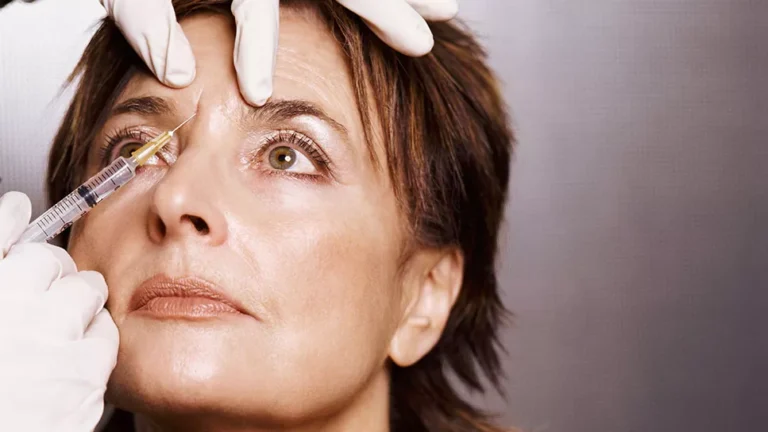
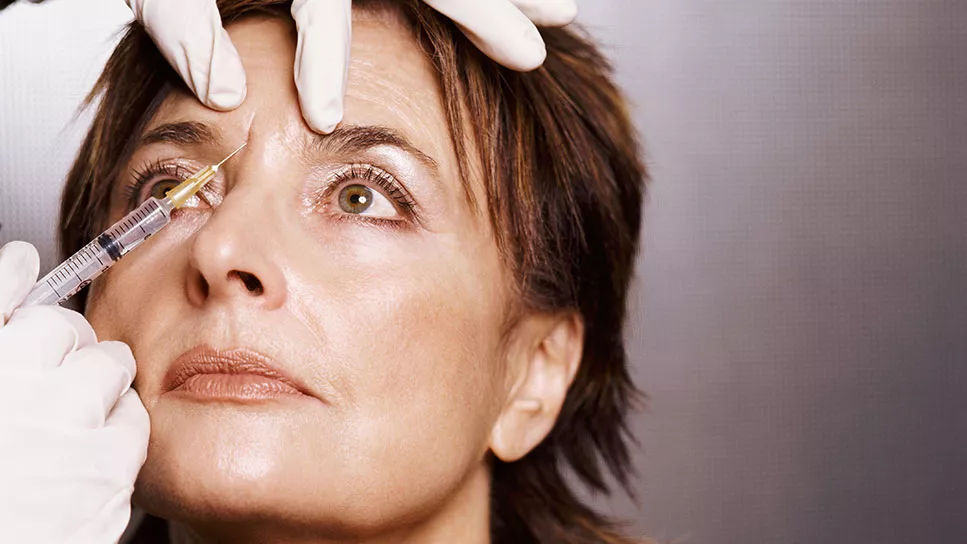
Injection: Dr. Selin Zehra Uçar injects Botox at the planned strategic points using special syringes with some of the finest needles available. Each injection causes only a momentary slight prick, and pain is minimal. Thanks to the speed of the procedure and the fineness of the needles, it is very comfortable.
After the procedure: There may be slight redness at the injection points, which usually disappears on its own within a few minutes. No bandage or dressing is needed, which is why eyebrow Botox is known as a practical “lunchtime treatment” after which patients can return to daily life immediately.
Step 3: Results and Aftercare
There are a few simple but important points to follow after eyebrow Botox so that the product stays in the right muscles and works as well as possible: for the first 4–6 hours, do not rub the treated areas and avoid hot showers, saunas, Turkish baths and intense exercise. The results do not appear instantly, and this is part of what makes the treatment natural. After 3–5 days you usually feel the muscles that pull your brows down gradually relaxing and a slight lift starting. The lift continues to increase over the following days, and after about 10–14 days eyebrow Botox settles fully and the final result appears: more lifted brows, more open, brighter eyes and a rested, positive expression. This elegant change brings fresh vitality to your face without changing the character of your expression. The result lasts on average 3–4 months. Regular eyebrow Botox treatments can both prolong the effect and contribute to a lasting improvement as the depressor muscles weaken over time.
Book Eyebrow Botox
We will assess together whether it suits you.
This page is for general information. Suitability, possible side effects and expected results are assessed at a medical consultation; results vary between individuals.