
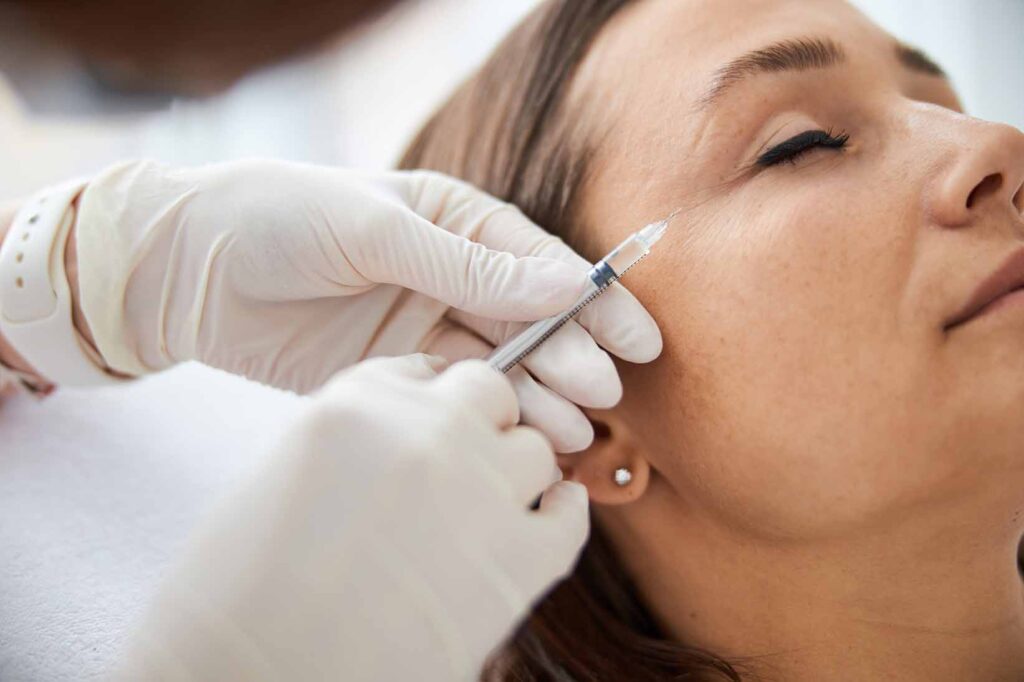
What can be done for healthy skin?
Mesotherapy is a very powerful tool for nourishing the skin, giving it a glow and maintaining its youthfulness and vitality. In addition, a few things you can do at home can make mesotherapy more effective and longer lasting. Cleansing the skin every day and applying day and night creams suited to your skin type, removing make-up before bed, and facial massage to stimulate lymphatic drainage all help preserve the skin’s radiance and vitality. It can also be beneficial to include foods such as artichoke, pomegranate, lemon and soybeans in a healthy diet, as they have antioxidant and anti-ageing effects on the skin and help regulate UV damage and pigmentation.
What Is Peeling?
Peeling removes dead cells and the keratin of the upper layer of the skin to speed up the renewal of skin cells. As well as chemical or plant-based peels, peeling can also be performed with laser treatments. The aim of peeling is to improve skin texture, smooth fine wrinkles, reduce hyperpigmentation (dark spots), minimise pores and improve acne. Results depend on the depth reached. Superficial, medium and deep peels are chosen according to the desired result. Peeling can also be combined with other treatments such as mesotherapy and Gold Needle. After treatment, protecting the skin from the sun, using sunscreen and continuing with home-care products are important for success.
How do vitamins affect the skin?
The products used in mesotherapy contain vitamins, which have different effects on the skin:
- Vitamin A: Better known as retinoids, it acts on the growth of epidermal cells and helps repair and restore collagen and elastin. This gives an anti-ageing effect, reducing fine wrinkles and smoothing the skin. Because it also reduces dark spots, it is used to help protect the skin from the harmful effects of the sun.
- Vitamin C: Triggers collagen synthesis, helps repair DNA damage and protects the skin against oxidation. In this way it strengthens the skin barrier, works against wrinkles and reduces the harmful effects of UV rays. Vitamin C also helps reduce dark spots by limiting excessive melanin production, and its antioxidant effect increases when combined with vitamin E.
- Vitamin E: This vitamin has been used in dermatology for more than 50 years and has antioxidant effects by neutralising free radicals in the skin. Vitamin E also reduces dark spots. Thanks to these effects, it is used in anti-ageing and hyperpigmentation treatments.
- Vitamin K: Plays a major role in regulating microcirculation, helping the skin look healthier and more vibrant.
What should a skincare routine look like?
Products in a skincare routine should be applied in a particular order.
- First, cleanse the skin with a cleanser and rinse with lukewarm water. People with normal, dry, sensitive or mature skin should use a milk or cream cleanser, while those with combination or oily skin should use a gel cleanser.
- Next, apply toner, either with a cotton pad or as a spray. People with normal, dry, sensitive or mature skin should use an alcohol-free toner, while those with combination or oily skin can use a toner containing alcohol.
- The next step is serum. People with normal skin can choose a serum according to their needs; those with dry and sensitive skin can use a hydrating, soothing serum with vitamin E and hyaluronic acid. Combination skin can benefit from an oil-balancing serum with salicylic acid, oily skin from a mattifying, oil-controlling serum with niacinamide, and mature skin from a cell-renewing, circulation-boosting serum with glutathione or coenzyme Q10.
- Then apply a moisturiser and eye cream suited to your skin type.
- The routine is completed with sunscreen in the morning and, a few evenings a week, a peeling product containing low concentrations of AHA and BHA.
One of the most important points in skincare is using products suited to your own skin type. Products should not be used after the expiry date printed on the packaging. When cleansing or applying moisturiser or sunscreen, use outward and upward movements from the centre of the face. Never go out without sunscreen, and always remove make-up before going to bed.
What are the benefits of using sunscreen?
Sunscreens work by preventing UV light from being absorbed by the skin. Studies have shown that, in addition to preventing reddening, darkening and dark spots, they reduce the risk of skin cancer in the long term. Paying attention to a few points when applying sunscreen increases its benefit. Sunscreen should be used in all four seasons, whether or not it is sunny. Choose a broad-spectrum sunscreen, in other words one that protects against both UVA and UVB rays. Products with an SPF above 30 offer better protection. Water-resistant products are also recommended, but remember that this effect lasts only about 1–1.5 hours. Apply a sufficient amount evenly to all exposed areas. Reapply every 2–4 hours, and after swimming and towelling dry. As sunscreen alone cannot provide complete protection, additional measures such as wearing a hat and staying in the shade in the middle of the day will further protect the skin from UV rays.
Book Skin Health
We will assess together whether it suits you.
This page is for general information. Suitability, possible side effects and expected results are assessed at a medical consultation; results vary between individuals.